If you make juice every morning, the variety of orange you buy matters more than the brand, the
packaging or the price. Some varieties yield a third more litres per box, and there’s one that
turns bitter if the juice stands for half an hour — and it’s the one that sells
most at Christmas.
Here’s the comparison, with what actually changes between them.
The short answer
For juice, in order: Valencia Late, Salustiana and, if there’s
nothing else, the navels drunk straight away.
| Variety |
When |
For juice |
The detail that matters |
| Valencia Late |
April to July |
The best |
Plenty of juice and it doesn’t turn bitter |
| Salustiana |
December to March |
Very good |
The winter option. Thin skin |
| Navel Lane Late |
February to May |
Fine |
It’s a navel: bitter if it stands |
| Navelina |
November to January |
Acceptable |
An eating orange. For juice, drink it at once |
Why navel juice turns bitter
This is the fact almost nobody mentions, and it explains half the complaints about home-made
juice.
The navel varieties — Navelina, Navel Lane Late, Washington — contain a compound
called limonin. In the whole fruit you don’t notice it: it’s in an inactive form
and tastes of nothing. But when you squeeze, the juice comes into contact with the air and with the
orange’s own acid, and that limonin turns into its bitter version.
The process takes between twenty minutes and an hour. That’s why freshly
squeezed navel juice is perfect and the same juice, kept for mid-morning, tastes odd.
How to recognise a navel
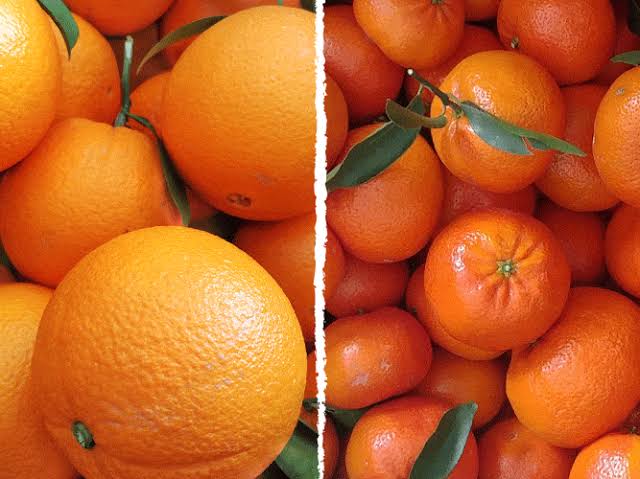
By the «navel»: that small secondary fruit at the end opposite the stalk, which looks like a
second segment poking out. That’s where the name comes from. If the orange has one, don’t squeeze it
to keep.
If all you have are navels and you want juice for later: freeze it. In the
freezer the reaction all but stops. And don’t keep it in metal, which speeds the bitterness up.
The Valencia Late, the one that got famous for this
It’s the variety that gave Valencian oranges their name across half the world, and its reputation
comes precisely from juice.
Why it’s the best
Three reasons at once. It has no limonin, so the juice keeps for hours without
turning bitter. It has thin skin and plenty of juice, so it yields more litres per
kilo. And it arrives in spring, after months on the tree building up sugar.
When it’s around
From April to July. It’s the one that closes the season, which is why plenty of
people who only buy fruit in winter have never tried it.
The green that misleads
In spring it can regreen: with the heat the skin takes back some chlorophyll and
greenish patches appear even though the fruit is perfectly ripe. It’s called regreening and it has
nothing to do with being unripe. A Valencia Late with slightly green skin in May is usually the best
of the year.
The Salustiana, the answer for winter
The trouble with the Valencia Late is that it doesn’t arrive until April. And from November to
March, which is when most juice gets drunk, there are only navels… and the Salustiana.
It has no navel, no limonin and practically no seeds. Its skin is thin and its segments very
juicy. In short: it’s the winter juicing orange, and the one we order ourselves at
home between December and March.
How much juice you actually get
The practical question: if I order a box, how much juice do I have?
It depends on the variety and the year, but the usual yield is between 40% and 50%
of the weight in juice. That is, a kilo of oranges gives between 400 and 500 millilitres.
| Amount |
Approximate juice |
Which is about |
| 1 kg |
400-500 ml |
Two glasses |
| 5 kg |
2-2.5 litres |
A week for one person |
| 15 kg |
6-7.5 litres |
A month for one person |
Three things raise the yield when squeezing: having the orange at room
temperature rather than cold, rolling it on the worktop under your palm before cutting it,
and not pressing right into the white part of the peel, which is what really turns bitter.
What really changes the taste of a juice
The variety governs, but there are four more factors that explain why the same kind of orange can
give an excellent juice or a mediocre one.
The point in the season
Within each variety’s window, the fruit isn’t the same on the first day as on the last. In the
first weeks the orange has more acidity and less sugar: it meets the standard, but it’s a long way
from its best. Halfway through the season the balance is the best of all. And at the end it gains
sweetness but loses a little freshness. If you like juice with character, order early; if you prefer
it sweet, order late.
The days since it was cut
It’s the factor that shows most and the one almost nobody controls. An orange loses water every
day after it leaves the tree, even in cold. That water is literally the juice missing from your
glass. Between an orange three days old and one three weeks old there can be a whole glass of
difference per two kilos, even though the two look identical from the outside.
The temperature when you squeeze
An orange cold from the fridge gives considerably less juice than the same one at room
temperature, because the membranes of the segments are stiffer and let go less easily. Taking them
out half an hour beforehand is one of the things that gives most yield for least effort. And if
you’re in a hurry, rolling the orange on the worktop under your palm breaks some of those membranes
and helps.
How hard you press
Pressing right to the end looks like it yields more, but it drags in the white part of the peel —
the albedo — and the bitterness with it. Better to stop a little short and squeeze one more orange:
the juice comes out cleaner and tastes better.
And if you want it for eating in segments
Then the order reverses. Navels are the best eating oranges: they peel without a knife, the
segments come out whole and they have no seeds. The Valencia Late is more awkward to peel and has
the odd seed.
That’s why a box of eating oranges and a box for juice aren’t the
same fruit with a different name: they’re different varieties picked in different months.
What we order ourselves, by month
You can see which variety is being picked right now in the shop, or look
at the full calendar.
Which is the best orange for juice?
The Valencia Late, from April to July: plenty of juice, thin skin and it
doesn’t turn bitter even if the juice stands. In winter, the best option is the Salustiana.
Why does orange juice turn bitter after a while?
Because navel varieties contain limonin, a compound that turns into its
bitter version on contact with air and with the acid in the juice. It takes between twenty minutes
and an hour. Freshly squeezed, you don’t notice it.
How much juice comes out of a 15-kilo box?
Between 6 and 7.5 litres, depending on the variety and the year. The usual
yield is between 40 and 50% of the weight.
Why are some oranges green in spring?
It’s called regreening and it happens to the Valencia Late with the heat:
the skin takes back chlorophyll even though the fruit is ripe. A greenish Valencia Late in May is
usually at its very best.
Can freshly squeezed juice be kept?
Yes, as long as it isn’t a navel variety. If it is, freeze it to stop the
bitterness, and don’t keep it in a metal container. Covered in the fridge it keeps well for a
day.