It’s the question we get most when somebody is about to order their first box: eating
oranges or juicing oranges. And behind it there’s a reasonable confusion, because in the
supermarket almost everything is sold as plain «oranges» and the label rarely says more.
They aren’t the same fruit under two commercial names. They’re different varieties,
picked in different months, and each is meant for one thing. Here’s what actually
changes.
The difference in one table
If you’re in a hurry, this is the summary.
|
Eating orange |
Juicing orange |
| What for |
Peeling and eating in segments |
Squeezing |
| Varieties |
Navelina, Navel Lane Late |
Salustiana, Valencia Late |
| When |
November to May |
December to July |
| Skin |
Thicker, peels by hand |
Thinner and tighter |
| Seeds |
None |
A few, depending on the variety |
| Juice |
Fine, but drink it at once |
Plenty, and it keeps |
| Size |
Large and even |
Medium, sometimes irregular |
What makes an orange an eating orange
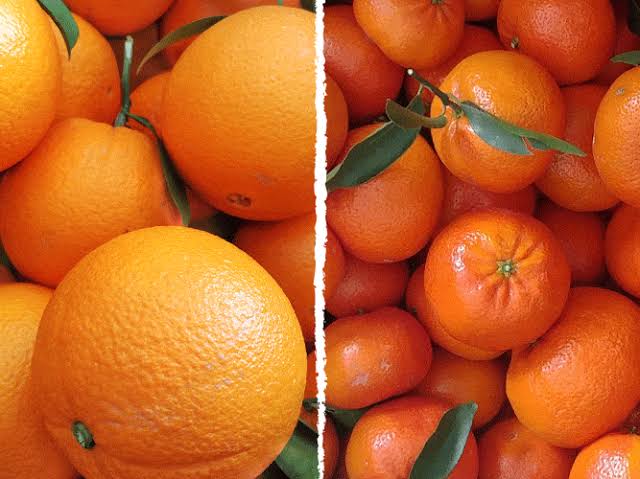
An eating orange has to do three things that aren’t asked of any other: peel without a
knife, come apart into whole segments and have no seeds. All three depend on the variety,
not on how you handle it afterwards.
The skin comes away on its own
The navel varieties — Navelina and Navel Lane Late are the two picked here —
have the white inner layer, the albedo, slightly thicker and less stuck to the segments. That’s
what lets you get a finger in at the stalk and pull the peel off in two or three goes. In a juicing
orange that same layer is tight against the fruit, and you need a knife.
The segment comes out whole
The membrane separating each segment is tougher in the eating varieties, so it stands being
handled without tearing. That’s why a peeled Navelina travels fine in a lunchbox and a Valencia
Late falls apart on the way.
They have no seeds
Navels don’t produce viable seeds: it’s a genetic quirk of the whole group. It’s why they’re the
ones that go on the table with children around, or when the orange is sliced into a salad.
And the navel
That’s where the name comes from. At the end opposite the stalk a tiny second fruit pokes out,
like a segment inside the orange. If it has a navel, it’s an eating orange, and
that works anywhere, supermarket included.
What makes an orange a juicing orange
Here the priorities reverse: it doesn’t matter that it’s hard to peel. What matters is
how much juice comes out and how that juice behaves once squeezed.
The yield
A juicing orange has thinner skin and fuller segments: less fruit thrown away and more liquid
used. The difference between one variety and another can reach a litre and a half per 15 kg
box, which isn’t nothing when you squeeze every morning.
That it doesn’t turn bitter
This is the real reason the distinction exists. Navel varieties contain limonin,
a compound that tastes of nothing in the whole fruit but that, once squeezed, turns into its bitter
version on contact with the air and with the juice’s own acid. It takes between twenty minutes and
an hour.
That’s why Navelina juice is perfect freshly made and tastes odd by mid-morning. The juicing
varieties — Salustiana and Valencia Late — don’t have that problem and keep covered in the fridge.
It’s set out in which is the best orange for juice.
Why you can’t have both in the same month
This is the part that throws people: they don’t quite overlap in the calendar.
The eating season starts earlier and the juicing season finishes later.
| Months |
What there is |
What it’s better for |
| November to January |
Navelina |
Eating. Juice only if drunk at once |
| December to March |
Salustiana |
Juice. The winter one |
| February to May |
Navel Lane Late |
Eating. Holds on the tree |
| April to July |
Valencia Late |
Juice. The best of them all |
In November and December what there is is eating oranges, and anyone wanting
juice will have to squeeze them and drink it straight away. In July it’s
the other way round: all that’s left is Valencia Late, awkward to peel but excellent to squeeze.
The best moment to have both at once is January to March, when the Salustiana
overlaps with the mid-season navels, Navel and Navelate, joined by the Lane Late in February. It’s also the peak of the season, when the fruit is best value.
It’s all in the calendar of Valencian fruit.
How many kilos to order, by what you’ll do with them
The box is 15 kilos, and with that number the question stops being which
variety and becomes how long it lasts.
If it’s for eating
An eating orange weighs between 200 and 280 grams, so a box holds about 55 to 70
pieces. For two people eating one a day, more than a month. And it keeps: somewhere cool
and airy, eating oranges hold up for three or four weeks without complaining.
If it’s for juice
You get between 6 and 7.5 litres per box, depending on the variety and the
year. If you have a large 250 ml glass at breakfast, a box lasts about four weeks for one person or
two for two.
If it’s for both
Then the mixed box is usually a
better idea than two identical boxes: it has oranges and mandarins, so you have fruit to pick at
without using up the ones for squeezing.
What doesn’t tell one from the other
There are three things people use to decide that are no use at all.
The colour
It says nothing. Skin colour is achieved in a chamber with ethylene — degreening
— without the fruit ripening inside, and in spring the opposite happens: the Valencia Late regreens
with the heat while at its very best. It’s set out in
why there are no oranges in August.
The size
A large orange doesn’t give proportionally more juice: it usually has thicker skin. Medium-sized
ones are almost always the best yielders.
The shine
An orange that shines like a shop window is waxed. It’s a legal, regulated
post-harvest treatment, but it says nothing about how good the fruit is: it says how long it has to
survive on a shelf. We don’t apply it, which is why our fruit has matt skin.
The third option, which almost nobody asks for
When somebody looks for an eating orange, what they often really want is fruit that’s
easy to eat: no knife, no mess, no seeds. And for that there’s something that beats any
orange.
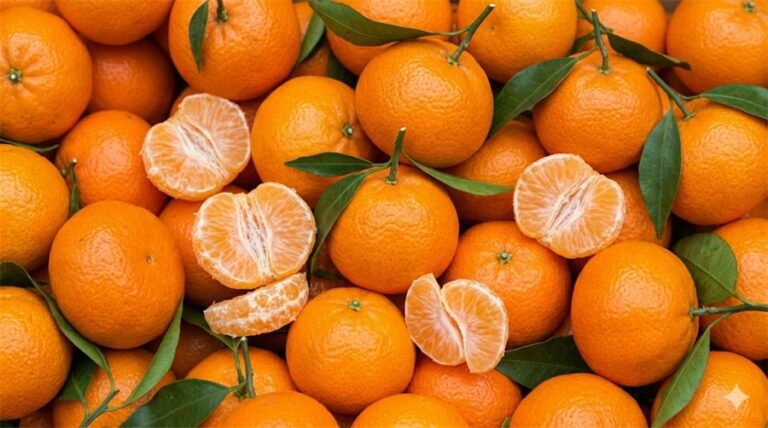
A mandarin peels with two fingers, fits in a coat pocket, and a
15 kg box holds about three hundred of them. Their season runs from September to May, so it more than
covers the eating orange’s. If the fruit at your house gets eaten mid-morning or goes to school
in a bag, the box of mandarins goes further than
the box of oranges.
What it won’t do is juice: you’d need eight or nine mandarins for a glass, and mandarin juice
goes off sooner. For that, oranges.
How we do it here
In the shop you won’t see both at once all year, because only what’s being picked that
week in the fields of Albalat de la Ribera is there. When the box of
oranges is an eating variety, it says so; when it’s a juicing one,
it says that too.
If you have a clear preference, write to us before ordering and we’ll
tell you which variety is coming in that week. And if you want to understand why the catalogue runs
short three months a year, it’s in From tree to table.
What’s the difference between eating and juicing oranges?
They’re different varieties. The eating ones — Navelina and Navel Lane
Late — peel by hand, have no seeds and the segments come out whole. The juicing ones — Salustiana
and Valencia Late — have thinner skin, give more litres and their juice doesn’t turn bitter even if
it stands.
Can you make juice with eating oranges?
Yes, and it’s good, but you have to drink it straight away. Navel
varieties contain limonin and the juice starts to turn bitter between twenty minutes and an hour
after squeezing.
Can you eat juicing oranges in segments?
You can, but they’re harder to peel because the skin is tight against the
fruit, and the Valencia Late usually has the odd seed. To eat by hand they’re considerably more
awkward than a navel.
Which months have eating oranges and which have juicing ones?
Eating, November to May. Juicing, December to July. From January to
March the two overlap, and that’s the best moment of the whole season.
How many oranges are in a 15-kilo box?
Between 55 and 70 pieces, depending on that week’s size. If it’s for
squeezing, you get between 6 and 7.5 litres of juice.