
Why untreated fruit doesn’t all look alike
On this page
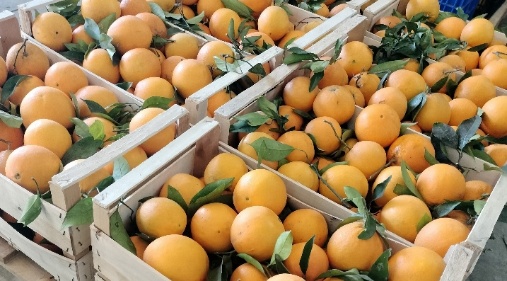
Anyone opening their first box after a lifetime of supermarkets notices the same thing:
the oranges aren’t all the same. Some are bigger than others, one has a mark on the
skin, a couple are a little paler and none of them shines.
That’s exactly what should happen, and it’s worth explaining why. Shelf uniformity isn’t a property
of fruit: it’s the result of a machine.
What a packhouse does and we don’t
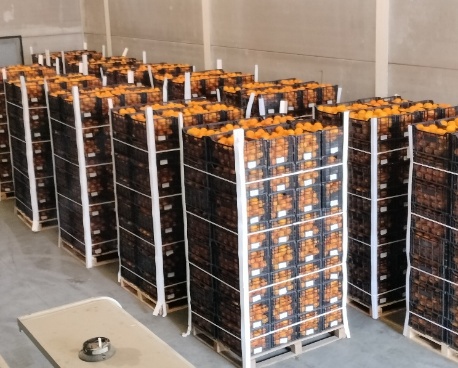
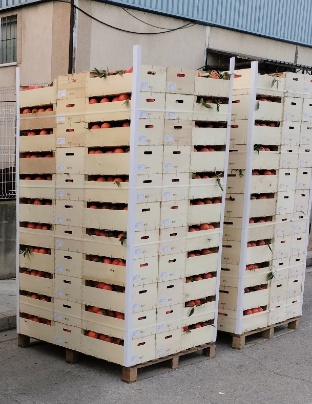
Between the field and a supermarket tray there’s a step called grading. The fruit
drops onto a line where belts and cameras sort it by size, by weight and by appearance, and discard
anything outside the commercial norm.
What gets discarded isn’t bad. It’s fruit that’s too small, too big, with a rub, with a blemish,
with slightly irregular skin or with less even colour. It goes to industry — juice, marmalade — or is
simply lost.
That’s why every orange on a tray looks cloned. It isn’t that the tree makes them that way: it’s
that the ones that didn’t come out that way never reached the shelf.
Worth saying without drama, because grading has its logic. A chain distributing to hundreds of
shops needs to know how many pieces fit in a case and that they all weigh the same, and a shelf where
every orange was different would be impossible to restock. The problem isn’t the machine: it’s that
its criteria have ended up looking like the criteria of fruit itself, and several generations have
grown up thinking a good orange is one identical to the one beside it.
Our box is filled in the field
The fruit is picked after your order comes in and goes into the box just as it comes off the tree,
minus anything that isn’t right. There’s no grader, no washing line, no cameras measuring colour. And
that’s why fifteen kilos arrive with the range of sizes a tree gives.
What each mark you might find is
| What you see | What it is | Does it matter? |
|---|---|---|
| Fine lines or streaks | A branch rubbing in the wind | No |
| A paler or flatter patch | The side that faced another fruit or a leaf | No |
| Small dark specks | Skin markings, superficial | No |
| Slightly rough skin | No applied wax | No |
| Greenish areas | Not enough cold nights, or regreening | No |
| Uneven sizes | Ungraded fruit | No |
| A soft, sunken patch | A knock or the start of decay | Yes |
| Green or bluish mould | Fungus. Spreads by contact | Yes |
The wind streaks
The commonest of all. A branch rubbing against the fruit through weeks of easterly wind leaves fine,
superficial lines on the skin. Underneath, the fruit is untouched: in fact they’re usually from the
most exposed trees, which are the best ventilated.
Uneven colour
An orange from early in the season can have a paler area, and a May Valencia Late can be frankly
greenish while being perfect. Skin colour depends on the cold of the nights, not on the sugar inside,
and as we don’t degreen, it goes as it goes. It’s explained in
how to tell whether an orange is any good.
The sizes
On the same tree, fruit from the top and outside is usually larger than fruit from inside the
canopy. A fifteen-kilo box has both, and that’s actually convenient: the big ones for squeezing, the
small ones for a bag.
The two that do matter
Everything above is cosmetic. These two aren’t.
Soft patches
If the skin sinks under gentle pressure and doesn’t spring back, that fruit is starting to go. If
the area is small, the rest is usable; if it covers a quarter of the fruit, out.
Mould
The green or bluish dust that appears on a soft spot. That fruit goes in the bin, and you also have
to check the ones that were touching it, because it spreads by contact. In a badly
kept box it can take half of them within days.
It’s also why conventional fruit carries post-harvest fungicide: without it, a pallet in cold
storage is a risk. We skip that because the box doesn’t wait anywhere, but in exchange it’s worth
checking every three or four days. The method is in
how to keep oranges.
What perfect fruit costs
There’s a sum that doesn’t usually get done. For a tray to come out flawless, a considerable share
of the crop falls by the wayside: fruit discarded for size, for shape or for a surface mark, at a
moment when it’s perfectly good.
Some of that is used by industry, and some is lost. And all of it gets paid for: the grading, the
discarding and the transport of the discards are inside the price of what does reach the shelf.
Selling direct lets you skip that whole sifting. It isn’t a moral virtue, it’s arithmetic: if the
box goes from the field to a house, nobody has to decide whether an orange with a streak on it fits in
a tray.
And yet inside it’s the same
This is the point worth holding on to. None of the cosmetic marks in the table affects what’s under
the skin. Sugar, juice and aroma depend on three things:
- The variety, which decides what each fruit is for.
- The month, because citrus doesn’t ripen once it’s cut.
- The time since cutting, which is what takes the aroma and the water.
None of the three shows on the skin, which is why staring hard at an orange before buying it helps
a good deal less than people think.
Put another way: the skin tells you how that fruit lived — what wind it had, which branch it rubbed
against, how cold the nights were — but not how it is inside. In fact, the most useful sign of whether
fruit is good isn’t visual but a matter of weight: two of the same size, the heavier one. And that
comparison is usually won by the one that doesn’t look like an advert.
With the market garden, even more so
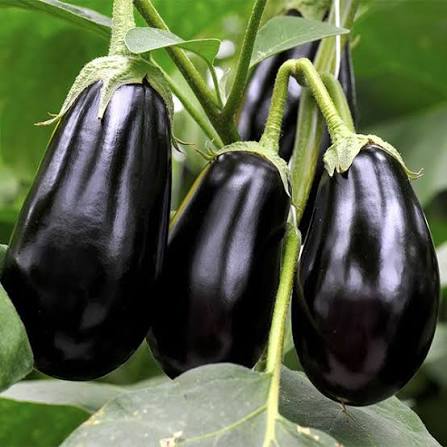
If the difference shows in citrus, in vegetables it’s blatant. A field aubergine doesn’t have the
catalogue shape you see on a tray, and one butternut squash is different from the next by
definition.
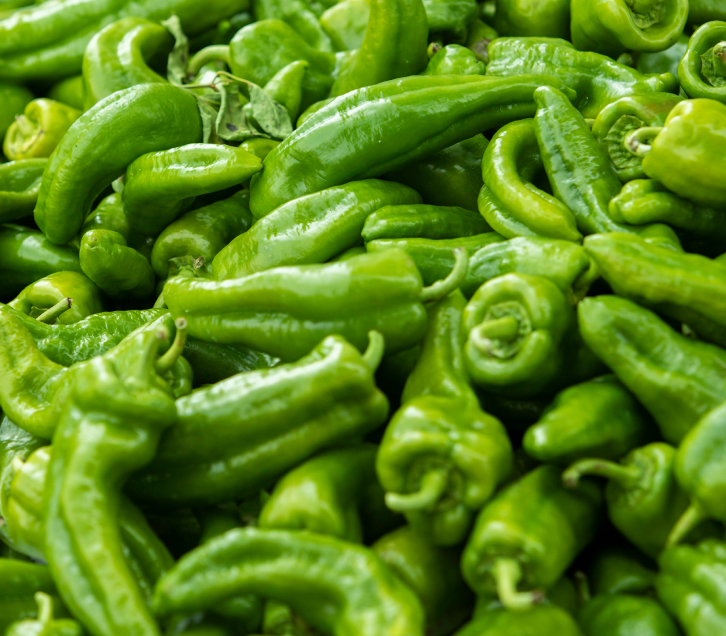
- Irregular shapes. Curved aubergines, peppers of different lengths, squashes with
more or less of a neck. The shape is decided by how the plant grew. - Sizes that don’t match. In one picking there are pieces half the weight of
others. - Soil and leaf marks. Above all on squash and Chinese cabbage, which grow touching
the ground or very close to it. - And no shine. The gloss on a supermarket pepper is, once again, wax.
The market garden covers exactly the months with no citrus, so it’s what fills the summer —
Italian frying pepper and
aubergine — and the winter — squash and
Chinese cabbage. It’s all in
the vegetables section and in the
year’s calendar.
What we do guarantee
Not that every piece is identical, because they aren’t. But that:
- It was picked after your order came in, not before.
- It leaves Albalat de la Ribera and arrives within 24 or 48 hours, with no cold
store. The times are in Shipping. - It carries no wax and no post-harvest treatment,
so the peel can be used. - And that if something really does arrive wrong — and it sometimes does, because a box travels — we
sort it out: write to us with a photo.
How we work and what we choose not to do is set out in full in
From tree to table, and who’s behind it, in
About us.
Why are the oranges in the box different sizes?
Because they don’t go through a grader. The fruit goes into the box as it
comes off the tree, and a tree gives fruit of different sizes. On a shelf you only see the ones the
machine selected.
Are marks on orange skin a problem?
Superficial ones, no: they’re usually branch rubs from the wind or contact
points with another fruit. What does need removing are soft, sunken patches and any speck of
mould.
Why are some oranges greener than others?
Because colour depends on the cold of the nights and not on the sugar. As we
don’t degreen — the ethylene chamber step that changes the colour — the skin goes as it goes. In
spring the Valencia Late even regreens while at its very best.
Is ungraded fruit worse?
No: it’s the same fruit before the sifting. What a grader does is sort by
size and appearance, not by flavour. In fact a good share of what it discards is perfectly fine.
What do I do if a piece arrives damaged?
Take it out as soon as you can, because mould spreads by contact to the fruit
beside it, and write to us with a photo. A box travels, and if something has arrived wrong we sort it
out.
Search the blog
Right now in the fields
Being picked in September:
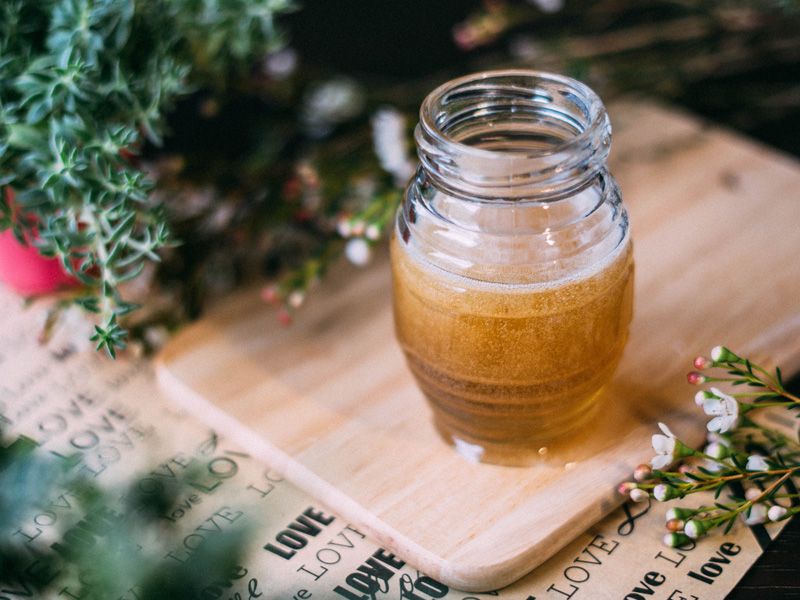
Lemons · Orange blossom honey · Italian frying pepper · Aubergine · Squash
Latest
From the tree to your door
It’s picked the day we prepare your order and leaves Albalat straight for your door.
What's available this week
The catalogue changes with the fields: it shows what’s being picked and hides what isn’t.