Coca de llanda — or coca boba, as half the Valencian Community calls it — is the
cake everyone here grew up eating at teatime. It’s named after the llanda, the
rectangular oven tray it’s baked in.
It needs no mixer, no cake tins and no pharmacist’s precision on the scales. And with the juice
and zest of freshly picked oranges it stops being an ordinary sponge.
- Preparation15 min
- Oven40 min
- Total55 min
- Serves12
Ingredients
- 3 eggs
- 200 g sugar
- 200 ml freshly squeezed orange juice
- 150 ml mild olive oil
- 300 g plain flour
- 1 sachet baking powder (16 g)
- The zest of 2 oranges
- A pinch of salt
- Sugar and cinnamon, for the top
The classic grandmother’s measure is a yoghurt pot: one of oil, one and a half of
juice, two of sugar and three of flour. It comes out the same and needs no scales, which was
precisely the idea.
How it’s made
- Zest the oranges first, before you squeeze them. Zesting half a squeezed orange is
extremely awkward, and the zest is exactly what’s going to give the aroma.
- Squeeze and strain the juice. Two or three oranges usually cover the 200 ml.
- Heat the oven to 180 degrees and line the tray with paper: a rectangular llanda or any
oven dish around 30 by 20 centimetres.
- Beat the eggs with the sugar until pale, three or four minutes with a hand whisk. It’s
the only thing that’s going to put air into the batter.
- Add the oil in a thread, then the juice and the zest, mixing.
- Fold in the flour with the baking powder and the salt, sifted, with a folding motion. The
moment there’s no dry flour left, stop.
- Pour it into the tray. The batter should sit two fingers deep, no more: a coca is
shallow by definition, and that’s why it comes out moist.
- Scatter sugar and cinnamon over the whole surface, generously. In the oven it forms the
crisp crust that’s half the point.
- Bake for 40 minutes in the middle of the oven, until a skewer comes out clean and the top
is golden. It’s cut into squares in the tray itself.
The three things that set it apart
It’s shallow
Two fingers, no more. A tall coca turns into an ordinary cake: it loses the balance between moist
crumb and sugar crust, which is exactly what you’re after.
It uses oil, not butter
Mild olive oil, one of the discreet-tasting ones. It’s what keeps it tender for three or four
days, where a butter cake dries out on the second. It can also be made with a strong extra virgin,
and then the flavour of the oil takes charge.
And the sugar on top
It isn’t decoration: in the oven it melts and forms a thin, crisp layer that contrasts with the
crumb. Without it, the coca is bland on top.
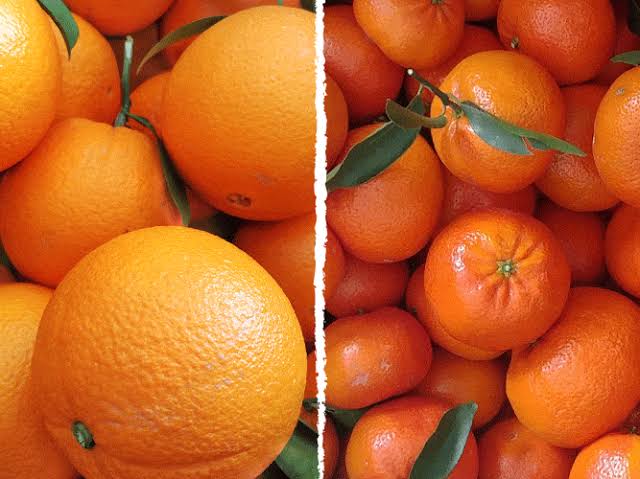
Which orange to use
It matters here, because the juice is liquid and aroma at the same time.
- From November to January it’s
Navelina, which is an eating orange. It gives excellent
juice for this: the bitterness of the navels appears after half an hour standing, and here the juice
goes into the oven within five minutes.
- From December to July, Salustiana or Valencia Late yield more litres per box.
The differences are in the comparison of varieties.
And you can only zest unwaxed fruit: wax seals the peel and doesn’t come off with water, so a
supermarket orange is a bad idea here. We cover it in
zesting citrus peel.
Variations
- Lemon, swapping the juice for 100 ml lemon juice and 100 of water, and the zest
for that of two lemons.
- Mandarin, which gives a softer, sweeter aroma.
- With ground almonds replacing 50 g of the flour.
- With pine nuts over the top before baking, as it’s done in some villages.
- With honey: swap 50 g of the sugar for two spoonfuls of
orange blossom honey, and the orange is then in the
coca twice over, in the juice and in the blossom.
Where the name comes from
The llanda is the rectangular metal oven tray, and for a long time it was the only tin in
the house. The coca is named after its container, in the same way that arròs al forn is
named after where it’s baked.
As for coca boba — boba meaning silly — it comes from there being no
mystery to it: no whisking egg whites, no softening butter, no resting times to respect. Everything
goes into a bowl, gets stirred and goes into the oven. It was the cake made when someone turned up
unannounced.
And it has a seasonal explanation that fits this recipe: the coca was made with whatever was
around — milk, water, juice — and in a house in the Ribera in January what was in the basket was
oranges.
How long it keeps
Three or four days covered with a cloth, at room temperature. The fridge dries it out, so keep it
outside. And it freezes very well in portions, up to three months: take it out in the morning and by
mid-afternoon it’s ready.
The next day, in fact, it’s moister: the juice spreads through the whole crumb.
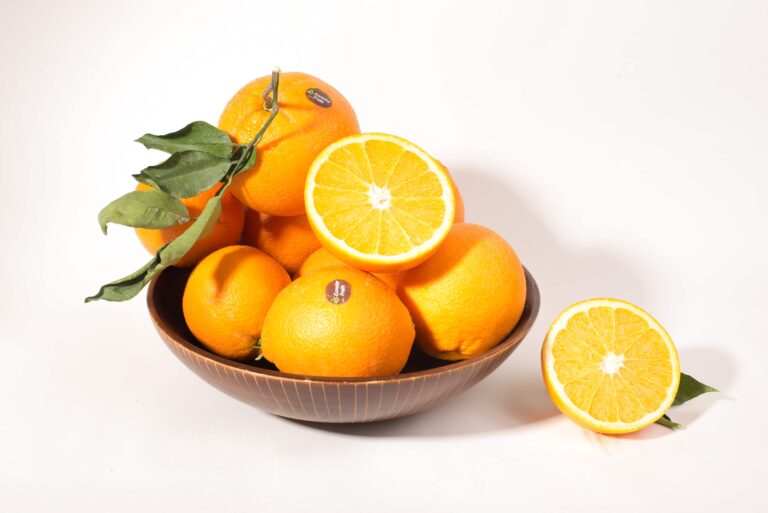
The orange it uses
A 15-kilo box holds between 55 and 70 pieces and gives
between 6 and 7.5 litres of juice. One coca needs 200 ml: two or three oranges. The full sums are in
how many glasses of juice come out of a box.
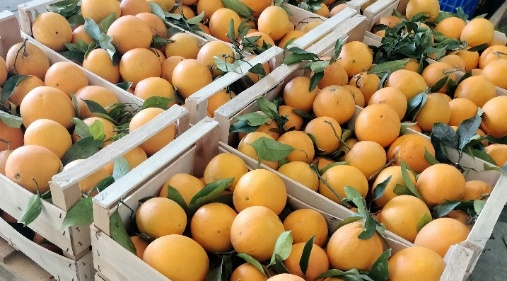
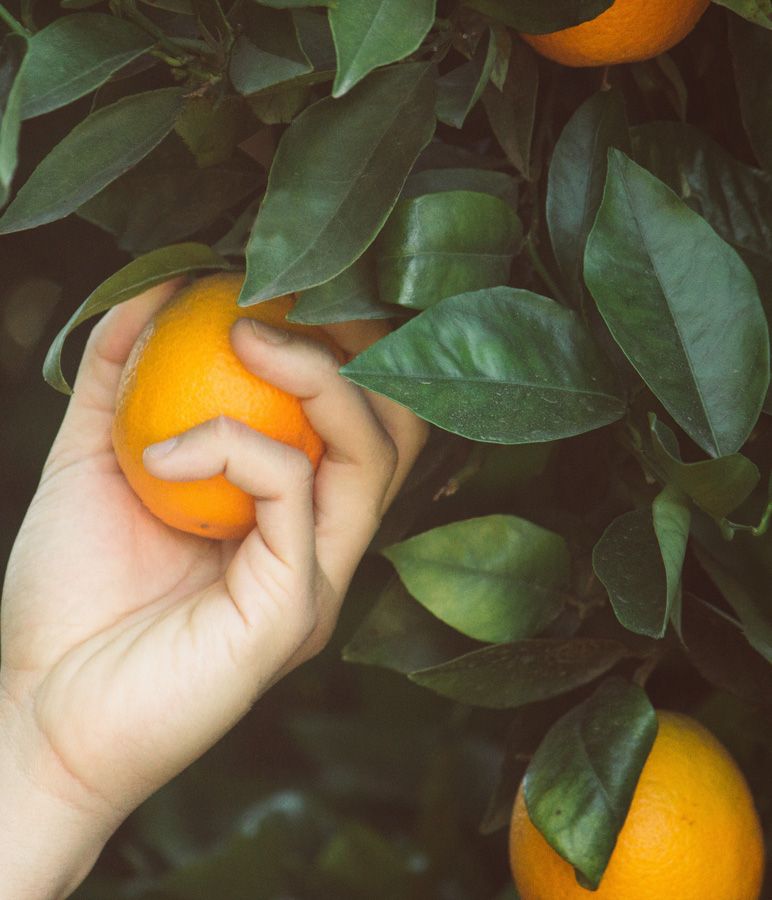
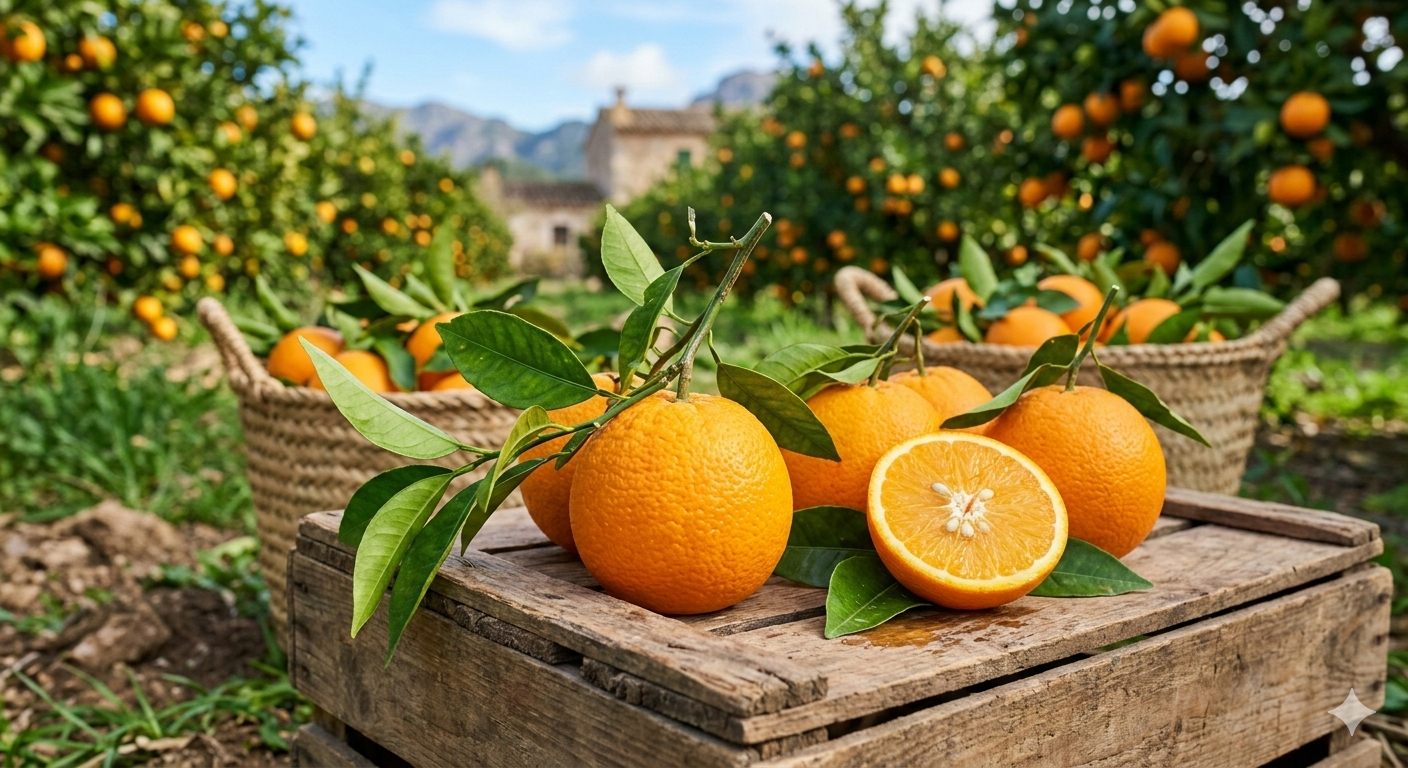
Ours is picked in Albalat de la Ribera after your order comes in and arrives within 24 or 48
hours, unwaxed and with no post-harvest treatment, so the peel can be zested after nothing more than
a wash. It’s in the oranges section from November to July.
What is coca de llanda?
A shallow Valencian cake baked in a rectangular tray — the llanda — and cut
into squares. It’s made with oil instead of butter and has a layer of sugar and cinnamon on top that
bakes crisp.
Why does the coca use oil and not butter?
Because it’s the traditional way and because it keeps far better: with oil
the coca stays tender for three or four days, where a butter cake dries out on the second.
Can it be made with carton orange juice?
It can, but you lose almost everything: the aroma comes above all from the
zest of the peel, which packaged juice doesn’t have. With freshly squeezed orange and its zest the
difference is considerable.
How long does coca de llanda keep?
Three or four days covered with a cloth and out of the fridge, which dries
it. The next day it’s usually moister. Frozen in portions, up to three months.
Can you zest any orange?
No: only fruit with no post-harvest treatment. The wax and the fungicide are
applied to the peel and don’t wash off, and on citrus it has to be declared on the label.