With almost all fruit, keeping it well means slowing time down. Not with the
persimmon: here time does something a lot of people actually want, which is turning a crisp
persimmon into the soft, spoonable one of old.
So the question isn’t how long it lasts, but how you want to eat it. And the
answer is in where you put it.
The two options, and the days each takes
| Where |
What happens |
How long it takes |
| Fridge, salad drawer |
It stays firm |
2 weeks |
| Somewhere cool, 12-16 ºC |
It softens slowly |
8 to 10 days |
| Kitchen, room temperature |
It softens |
5 or 6 days |
| With apples or bananas |
It softens fast |
2 or 3 days |
| Freezer, as pulp |
It keeps |
6 months |
With a fifteen-kilo box, what works is using both columns at once: part of it in the fridge to
wait, and a few pieces outside getting on with it.
If you want it firm
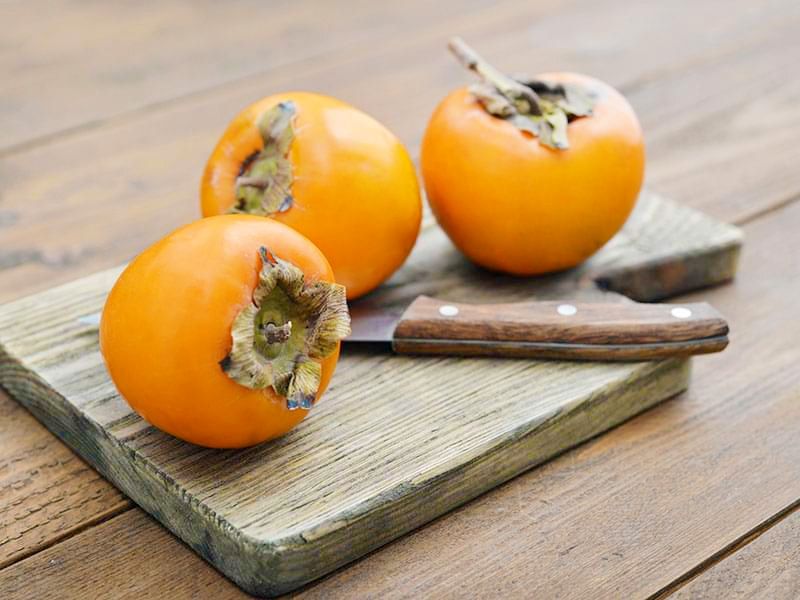
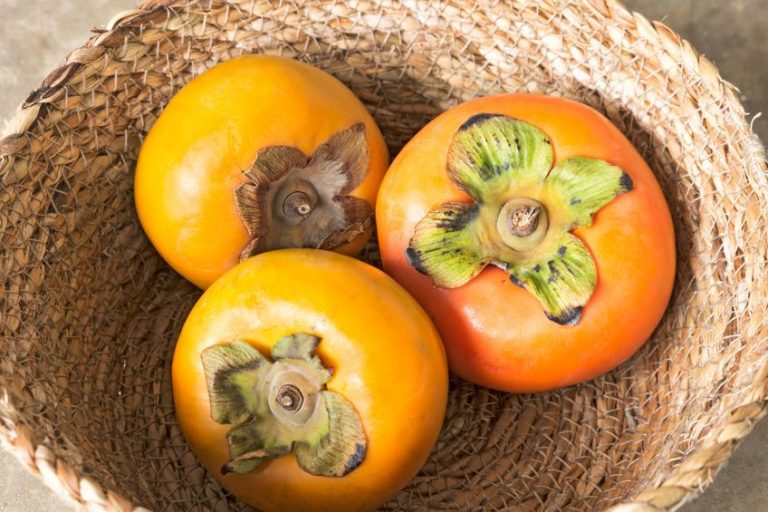
The persimmon that reaches your house already comes without astringency — it’s a Persimon, and the
difference from the old one is in
what a Persimon persimmon is — so it can be
eaten the day it arrives. To keep it that way:
Into the salad drawer
There the temperature is around 6 to 8 degrees and the humidity is high, which is what suits it.
Two weeks without noticeably giving way.
No closed bag
Same as with citrus: the bag traps the humidity the fruit gives off and that’s where mould starts.
Loose in the drawer, or in a cloth bag.
In a single layer
A firm persimmon is more fragile than it looks, because it has no tough skin to protect it. A
knock leaves a soft patch that later rots. Piled up, the ones underneath get marked by the weight.
Away from apples
This is the classic mistake. Apples and bananas give off ethylene, the hormone
that triggers ripening, and persimmons are especially sensitive: one apple in the same drawer can
soften the whole box in two or three days.
If you want it soft
Then the plan is exactly the opposite, and the advantage is that you won’t meet the astringency:
a Persimon doesn’t have it, soft or firm. It’s the big difference from the persimmon of
thirty years ago, when you had to wait whether you liked it or not and even then sometimes got a
nasty surprise.
Outside, in the fruit bowl
At room temperature, in five or six days it starts to give under the fingers. In a week it’s at
spoon point: cut in half and eaten with a teaspoon, the skin doing the job of a bowl.
And if you want to speed it up
A paper bag with an apple or a banana inside. The ethylene concentrates and in two or
three days you have it. It’s the same trick as with avocados and it works exactly the
same.
How to tell it’s ready
By feel, not by colour: it gives under a finger like a ripe tomato and the skin looks translucent,
almost glassy. If you can feel liquid inside, it’s at its peak and needs eating now.
How to stagger a fifteen-kilo box
It’s fifty to sixty pieces and the season lasts three months, so the box needs organising the day
it arrives. The method that works best:
- Check and separate. Any fruit with a knock or a mark goes to one side: those get
eaten first, they won’t keep.
- Six or eight outside, on a tray, for the current week. The first days you have
them firm and by the end of the week, soft.
- The rest into the fridge, in a single layer if it fits, and you move them out to
the fruit bowl every few days.
- When the last third is left and you can see you won’t get through it, turn it
into pulp and freeze it.
With that, a box lasts five or six weeks between two people eating one a day.
How to eat it at each point
How it reaches the table changes completely depending when you take it, and it’s worth knowing
because a lot of people only know one of the two.
Firm
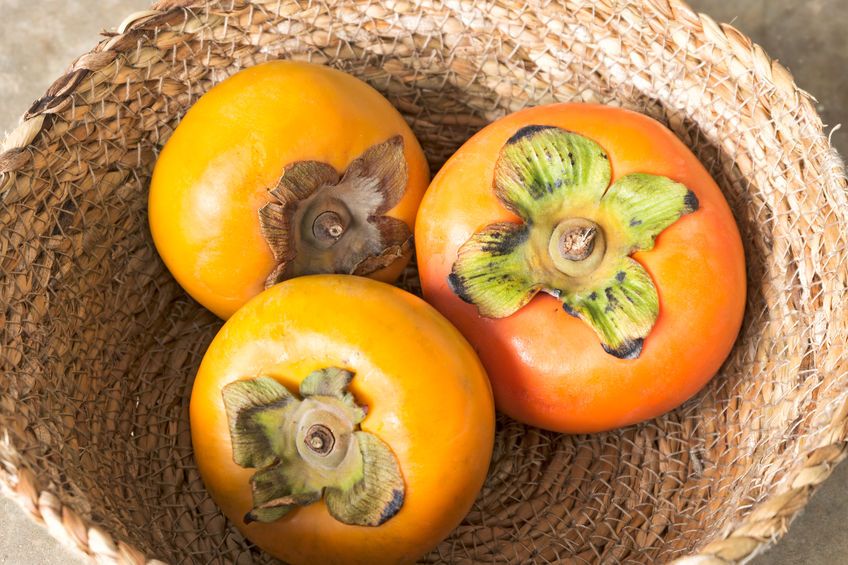
Treat it like an apple. Take the skin off with a peeler and cut it into wedges, or slice it
straight through with the skin on, which is edible though not everyone wants it. The leaf at the base
pulls off by hand.
Raw it takes company well: with hard cheese, with walnuts, with cured ham or in a green salad,
because it doesn’t release water or fall apart when mixed.
Soft
Cut in half and eaten with a teaspoon, using the skin as a bowl. Cold is better than room
temperature, and a little cinnamon or lemon juice over it improves it considerably.
At this point it’s what replaces banana in baking: the mashed pulp gives moisture to a cake and
lets you cut the sugar in the mix.
And the middle point, which is the best
When it starts to give but can still be cut. That’s when it has the most sweetness and still holds
its shape on a plate. It lasts a day or two, which is why it’s worth always having a few pieces out
of the fridge rather than taking them all out at once.
Freezing the pulp
The way out when the box starts to soften all at once, which is what usually happens at the end.
Cut the persimmon in half, scoop the pulp out with a spoon and keep it in jars or an ice-cube tray.
Six months in the freezer. Thawed it has the texture of a purée, so it’s no use for
eating in wedges, but it’s perfect for smoothies, for cakes — it replaces mashed banana and lets you
cut the sugar — or eaten half-frozen, which doesn’t appeal in October but does in June.
A whole persimmon doesn’t freeze well: thawed it releases water and comes out like a sponge.
The mistakes that cost you fruit
Keeping it in the fruit bowl with everything else
Next to apples, bananas or pears, the ethylene takes it out. And as it’s the most delicate thing in
the bowl, it’s the first one you lose.
Putting it high up in the fridge
Like citrus, it suffers below 3 or 4 degrees: sunken marks appear and the flesh loses texture. The
place is the salad drawer and not a shelf at the back, which is the coldest area. The same happens
with oranges, and it’s in oranges in the fridge?.
Stacking them in the box itself
The transport box isn’t the place to keep them for three weeks. It’s made for the fruit to arrive
in, not to wait in.
Waiting for them all to be the same
They won’t be. A box of ungraded fruit ripens unevenly, and that’s exactly why it’s worth taking
out the ones that give way first rather than treating them as a block.
Make the most of the window, it’s short
The persimmon season runs from October to December and it’s the narrowest in the
whole calendar: about ten or twelve weeks. When it’s over, it’s over until the following autumn, and
what’s sold the rest of the year comes from a cold store or another hemisphere.
Our box of persimmons is picked in Albalat de la Ribera
after the order comes in and leaves for your home within 24 or 48 hours. You can see it in
the persimmon section while the season lasts, and the full year’s
calendar is in what there is each month.
How long do persimmons last in the fridge?
About two weeks firm, in the salad drawer and not in a sealed bag. Out of
the fridge they soften in five or six days, which is what you want if you like them spoonable.
How do you soften a persimmon faster?
Put it in a paper bag with an apple or a banana. The ethylene they give off
speeds up ripening and in two or three days it’s soft.
Does a soft persimmon turn astringent again?
No. The Persimon persimmon has no astringency, so whether it softens or not, it
won’t leave your mouth dry.
Can persimmons be frozen?
As pulp, yes: cut in half, scooped out with a spoon and kept in jars or an
ice-cube tray, it keeps six months. Whole doesn’t work, because thawed it has the texture of a
sponge.
How do I know when a persimmon is ready?
By feel. Firm and smooth, eat it in wedges like an apple. When it gives
under a finger and the skin looks translucent, it’s at spoon point. If you can feel liquid inside,
eat it now.