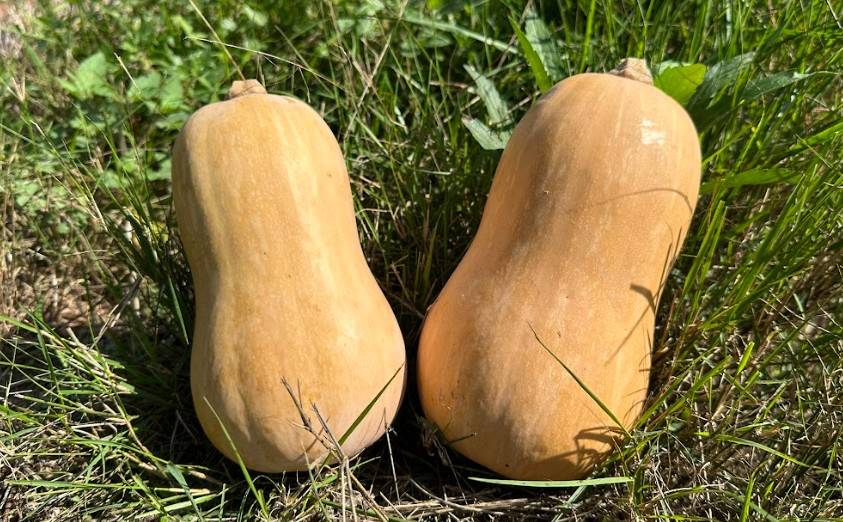
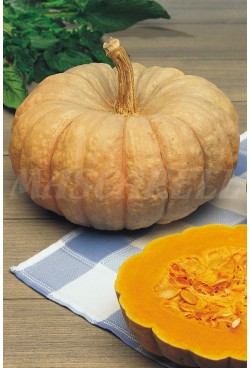
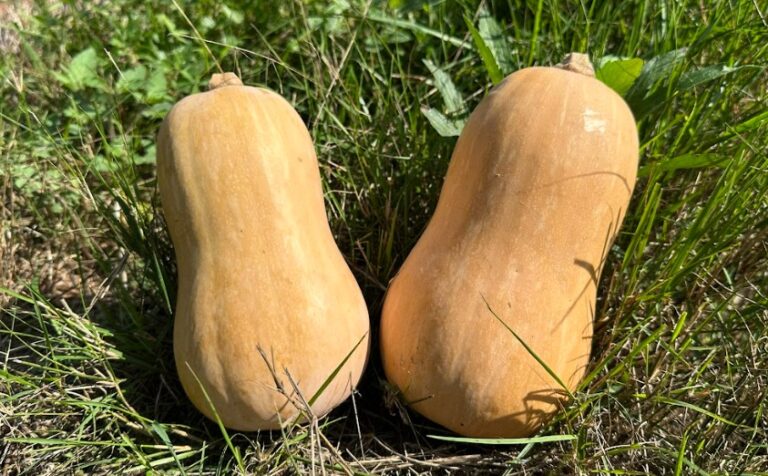
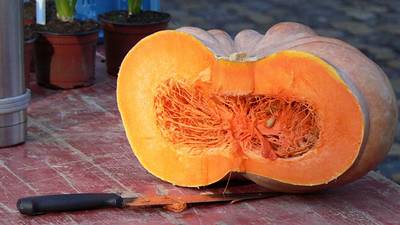
The winter market garden has two squashes and they aren’t interchangeable. One is the
butternut, long with a narrow neck, and the other is the sweet roasting
pumpkin, larger and rounded.
They cook differently, peel differently, cut differently and keep differently. Choosing the wrong
one explains a good share of the watery soups and bland roasts that come out of a kitchen in the middle
of winter.
The two, face to face
|
Butternut |
Sweet roasting pumpkin |
| Shape |
Long, with a solid neck |
Large and rounded |
| Weight |
1 to 2 kg |
3 kg or more |
| Skin |
Thin, comes off with a peeler |
Hard, needs a knife |
| Seeds |
Few, only in the base |
Many, right through the middle |
| Flesh |
Dense, deep orange |
More fibrous and juicy |
| Best for |
Soups, purées, dice |
Roasting, baking, sweets |
| Keeps whole |
3 or 4 months |
Several months |
Butternut: the practical one
If you’re only going to buy one, this is it. Its shape — a long, solid neck with no cavity, and a
rounded base where all the seeds are — makes it the easiest of all squashes to work with.
It peels with a peeler
The skin is thin and gives to an ordinary potato peeler. That’s an enormous difference from any
hard-skinned squash, where you have to go in with a big knife and some caution.
Almost all of it is flesh
Nothing is wasted from the neck: it’s solid. The seeds are concentrated in the bottom part, so
the yield is very high compared with a round squash, which is hollow inside.
And the flesh is dense
It has less water than other squashes, which is why it gives soups with body without needing potato
or thickeners. It also holds up better in dice: it doesn’t collapse in a stew or on a roasting tray.
The roasting pumpkin: the one for trays
The big one, usually bought in pieces because a whole one is several kilos. Its name says it all:
it’s the one that asks for an oven.
What it does better
Roasted in wedges with the skin on, until the edges caramelise. The flesh, a little juicier and more
fibrous than butternut, is exactly what you want in a roast: it softens and concentrates sugar without
drying out.
It’s also the one for traditional sweets — candied pumpkin, pumpkin pies — and the one that goes
best with cinnamon and a slow oven.
What it costs you
Peeling it. The skin is hard and you have to steady it properly, cut it into wedges and then take
the skin off each wedge with a knife. So whenever you can, better to roast it with the skin
on and scoop the flesh out with a spoon at the end: it’s easier, safer and comes out
better.
When they’re around
Butternut from June to February; the sweet roasting pumpkin from October to April. They’re picked at the end of summer, when the plant dries
off, and they keep for months whole, so the selling season is far longer than the picking one.
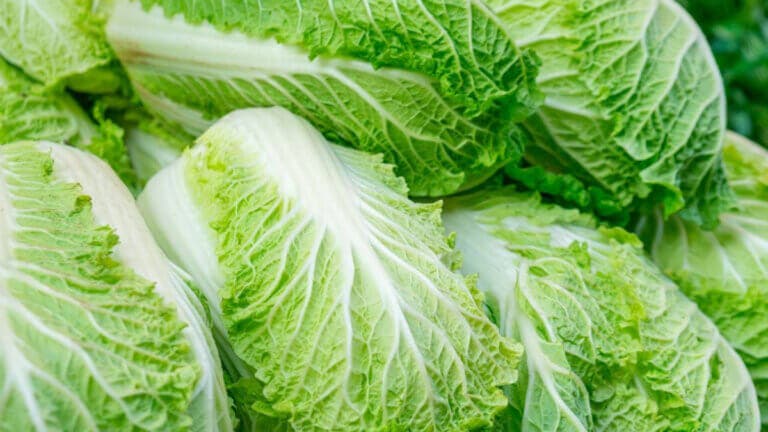
Along with Chinese cabbage, it’s what fills the winter market
garden while the aubergine and the pepper retire until late spring. The full year is in the
calendar of what there is each month.
Why they’re picked in September and eaten in January
It’s the quirk that sets them apart from everything else in the catalogue. Squash is picked when the
plant dries off, at the end of summer, and from then on it improves by itself: over
the first weeks off the plant it loses a little water and concentrates sugar, so a November squash is
usually sweeter than the same one in September.
It’s the exact opposite of what happens with citrus, which doesn’t ripen at all once cut and can
only go downhill. That’s why an orange has to be eaten soon and a squash can wait: two different ways
of understanding a season, living side by side in the same field.
How to choose them
- It should feel heavy. Here weight does govern: a squash that’s light for its size
is dry inside.
- The stalk, dry and attached. The best sign of all. A green stalk means it was cut
too early; no stalk at all is an open door for fungus and it keeps far less well.
- Hard skin. If you can mark it with a fingernail, it isn’t at picking point yet and
it won’t keep.
- A hollow sound when you tap it.
- No soft patches or cracks. Soil marks and patches where it lay on the ground are
normal and don’t matter.
How to cut it without an accident
It’s the vegetable that causes the most kitchen accidents, and almost always for the same reason:
trying to drive a knife into a curved, slippery surface.
- Cut the base off first, so it sits flat on the board and doesn’t move.
- Separate the neck from the body, if it’s a butternut: two far more manageable
pieces.
- Halve it by resting the blade and pushing with your palm, without rocking.
- And if it’s very hard, two minutes in the microwave softens it just enough to deal
with.
The seeds come out with a spoon. Don’t throw them away: washed, dried and roasted in the oven with
salt they make an excellent snack and it’s the part almost everyone wastes. A large squash gives a
whole bowlful, and they keep a couple of weeks in a sealed jar.
And the skin, on the butternut, is edible too: roasted it goes tender and doesn’t need removing.
Only the big roasting pumpkin’s skin is too tough for that.
How to keep them
They are, by a distance, the longest-keeping thing in the catalogue.
- Whole, somewhere cool, dry and dark: three or four months. A pantry, a store room
or a covered balcony. No fridge and no preparation needed.
- No bag and no plastic. In the open, resting on cardboard and not touching other
pieces.
- Once started: covered with cling film in the fridge, four or five days.
- Diced, frozen: raw, spread on a tray and then bagged. Six months, and it goes
straight into the pot without thawing.
- Roasted or puréed, frozen: also six months, and the easiest way to keep half a big
squash.
That’s why squash was for centuries a winter vegetable in every country household: picked in
September and eaten through to March with no cold store and no preserving. Before industrial
refrigeration existed, it was one of the few fresh things available in January.
What to do with each
With the butternut
- Soup, with leek and stock. No potato: it doesn’t need it.
- Diced in the oven, with oil and rosemary, as a side.
- In stews and rice dishes, because it doesn’t fall apart.
- And raw, grated, in a winter salad with
Chinese cabbage: few people do it and it works very well.
With the roasting pumpkin
- Roast wedges with the skin on, until caramelised.
- Cakes and pies, with the flesh roasted and drained.
- Candied, the traditional preserve.
- And with honey. Roast pumpkin with a drizzle of
orange blossom honey and cinnamon: two products from
the same district on the same plate.
Ours
The butternut squash and the
sweet roasting pumpkin are picked in Albalat de la Ribera
at the end of summer and leave for your home within 24 or 48 hours. They arrive with soil marks and
patches where they lay on the ground, and in uneven shapes and sizes: normal for a vegetable that
hasn’t been through a grader, and it’s in
why untreated fruit doesn’t all look alike.
They’re in the vegetables section while the season lasts.
Which squash is better for soup?
The butternut. Its flesh is denser and has less water, so it gives soup with
body without needing potato, and it also peels with an ordinary peeler and has hardly any seeds.
How long does a whole squash last?
Three to four months somewhere cool, dry and dark, with no bag and no
fridge. It’s the longest-keeping thing from the market garden. Once opened, four or five days covered
in the fridge.
How do you cut a hard squash safely?
By cutting the base off first so it sits flat, separating the neck from the
body if it’s a butternut, and pushing the blade with your palm without rocking. If it’s very hard, two
minutes in the microwave softens it.
Can squash be frozen?
Yes, raw in dice — spread on a tray and then bagged — or already roasted and
puréed. Either way it keeps about six months, and the dice go into the pot without thawing.
Can you use the squash seeds?
Yes: washed, thoroughly dried and roasted in the oven with a little salt
they’re excellent. It’s the part almost everyone throws away.