

Oranges in the fridge? Where to really keep them

On this page
It’s one of those household questions every home settles differently: do oranges go in
the fridge or not? Some people always put them in, some never would, and both positions
have something to them.
The short answer is that it depends how long you’ll take to eat them. And the
long one has to do with what cold does to citrus, which isn’t quite what people imagine.
The quick answer
| If you’ll take | Where |
|---|---|
| Less than two weeks | Outside. Somewhere cool and airy |
| Two to four weeks | Outside if you have a cool spot; if not, the fridge |
| More than a month | Fridge, salad drawer |
| Already cut or squeezed | Fridge, always |
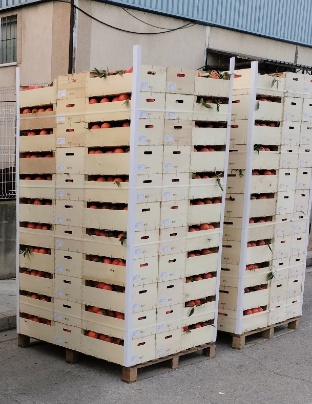
With a fifteen-kilo box, the usual answer is a mix: most of it outside, and the last third into
the fridge when it starts to drag on.
What cold does to an orange
Two things, one good and one less so.
The good: it slows everything down
An orange goes on breathing and transpiring after it’s cut. Cold slows that metabolism, so it
loses water more slowly, takes much longer to wrinkle and gives mould a harder time. Which is why in
the salad drawer they hold for four to six weeks where in the kitchen they’d last
one.
The bad: it dulls the aroma
The essential oils in the peel — what you smell when you peel one — evaporate less in the cold,
and the flavour compounds go sleepy. An orange straight from the fridge tastes of a good
deal less than the same orange at room temperature.
There’s a fix, and it’s the most useful advice in the whole article: take them out half
an hour beforehand. They get almost all of it back.
The test, if anyone wants to try it at home, is simple: cut open one orange straight from the
fridge and another that has been out for an hour, both from the same box. The difference in smell is
obvious before you taste them, and in flavour it’s so clear that plenty of people swear they’re from
different days.
The limit: below 3 degrees they suffer
There’s a technical detail that explains a lot of disappointments. Citrus is warm-climate fruit,
and below about 3 or 4 degrees it develops what’s called chilling
injury: the skin pits, sunken brown marks appear and the flesh loses texture.
It isn’t that they rot, it’s that they spoil in another way. And in a domestic fridge this happens
more than you’d think, because the top of the back wall and the areas near the evaporator are
considerably colder than the bottom drawer.
That’s why the place is the salad drawer and not just any shelf. There the
temperature is around 6 to 8 degrees and the humidity is higher, which is exactly what suits
citrus.
The spot almost everyone has and doesn’t use
Before resorting to the fridge it’s worth looking at the house with fresh eyes. What an orange
wants is between 8 and 15 degrees, no sun and some air, and in winter that exists in
almost every home:
- A covered balcony or an enclosed drying area.
- A store room or an unheated room.
- The garage, if it doesn’t smell of anything odd.
- A pantry on an outside wall.
- The floor of a hallway cupboard, usually the coolest spot in a flat.
Any of those gives three or four weeks without losing aroma, which is what the
fridge can’t offer. In summer things change and there are fewer options, though in summer there are
no seasonal oranges either:
the tree is busy with something else.
The four fridge mistakes
Putting them in a closed bag
The commonest one. The bag traps the humidity the fruit gives off and in the cold that condenses:
droplets first, mould after. In the drawer, loose, or in a cloth bag.
Putting them next to apples or bananas
Both give off ethylene, the hormone that triggers ripening, and that speeds up
the ageing of everything near them. In a small fridge it shows within days.
Keeping the ones already affected
Cold cures nothing. A fruit with a speck of mould will carry on and infect its neighbours, more
slowly but just the same. Take it out before storing.
Eating them straight from the fridge
The most expensive mistake of all, because you throw away half the flavour you paid for. Half an
hour on the worktop, and that’s it.
Cut fruit, juice and the freezer
Half an orange already started
Into the fridge without question, covered with cling film pressed against the flesh or face down
on a plate. It holds two days, though the aroma goes sooner.
Freshly squeezed juice
In the fridge, covered and in a glass container — metal gives it a taste — it keeps well for a
day. If it’s a navel variety, bear in mind it will start to turn bitter within the hour because of
limonin: it’s explained in
which is the best orange for juice.
Freezer
For whatever isn’t going to make it. Juice keeps six months in jars or ice-cube trays; peeled
segments, frozen loose on a tray and then bagged, come out perfect for smoothies. A whole orange
doesn’t freeze well: thawed, it has the texture of a sponge.
And if you live in a small flat
All of the above assumes a pantry or a covered balcony, and plenty of homes have neither. These
are the ways out that work best when space is the problem.
Split the box in two
The most effective. Five kilos outside, on a tray or in a basket to eat from, and the rest into
the salad drawer. You top up the fruit bowl from the cold every few days and always eat fruit at room
temperature without giving up the shelf life.
Look at floor level, not up high
In a flat, warm air rises. The floor of a hallway cupboard, the bottom of a unit or the back of a
loft cupboard on an outside wall can be three or four degrees below the kitchen worktop, and that’s
days of life.
The terrace, with caveats
In winter a covered terrace is an excellent spot, as long as it doesn’t get the midday sun and
isn’t going to freeze. Below zero the orange freezes inside and thaws out mealy.
Get ahead of it and freeze
If from day one you can see you won’t get through it, don’t wait for the fruit to start giving
way: squeeze three or four kilos and freeze the juice in jars. It takes a quarter of the space and
keeps for six months.
And with mandarins and persimmons, the same?
Not quite, and it’s worth knowing if you’ve ordered a mixed box.
The mandarin is more delicate because its skin is thinner: it lasts less outside
and gets crushed if piled. Out of the fridge, in a single layer, a week; after that, into the salad
drawer. The types and their months are in
clementine, mandarin and satsuma.
The firm persimmon works the opposite way to everything else: the fridge is
precisely what keeps it hard for two weeks, and outside it softens in five or six days. There you
decide how you want it, and it’s in
what a Persimon persimmon is.
The full method for oranges, with the times for each spot in the house, is in
how to keep oranges. And what arrives in each
box is picked after the order comes in, so the countdown
starts at your house and not in a warehouse.
Can oranges be kept in the fridge?
Yes, and they hold for four to six weeks in the salad drawer. In exchange
they lose aroma, so it’s worth taking them out half an hour before eating. If you’ll get through them
in two weeks, better outside.
Why do my fridge oranges have brown marks?
It’s chilling injury: below 3 or 4 degrees the skin pits and sunken marks
appear. It usually happens when they’re kept on a high shelf or against the back wall, rather than in
the salad drawer.
What’s the best place to keep oranges?
Somewhere between 8 and 15 degrees, out of the sun and with some air: a
covered balcony, a store room, a garage or a pantry on an outside wall. There they hold three or four
weeks without losing aroma.
Can a whole orange be frozen?
It isn’t worth it: thawed, it has the texture of a sponge. What does work is
freezing the juice, the peeled segments or the zest.
How long does orange juice keep in the fridge?
A day, covered and in a glass container. If the variety is a navel —
Navelina or Lane Late — it will start to turn bitter within the hour, though it’s still perfectly
good.
Search the blog
Right now in the fields
Being picked in September:
Lemons · Orange blossom honey · Italian frying pepper · Aubergine · Squash
Latest



From the tree to your door
It’s picked the day we prepare your order and leaves Albalat straight for your door.
What's available this week
The catalogue changes with the fields: it shows what’s being picked and hides what isn’t.