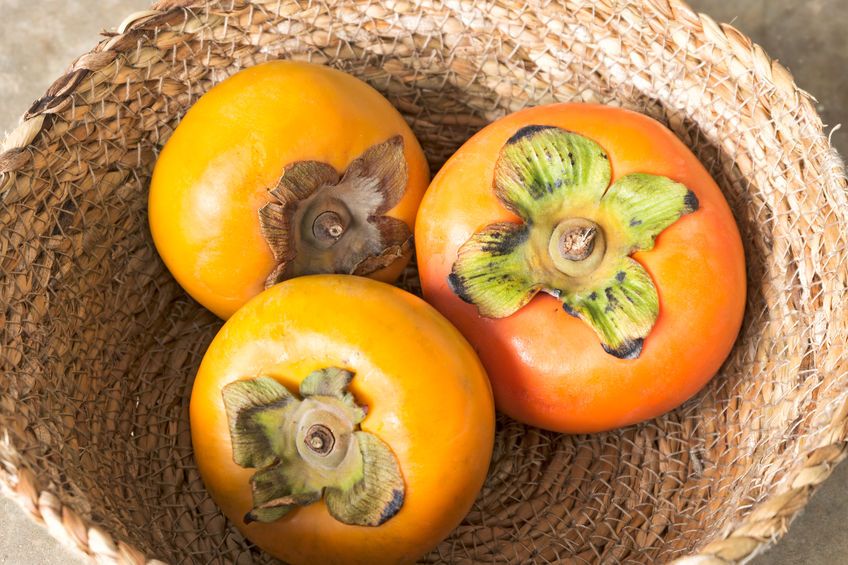
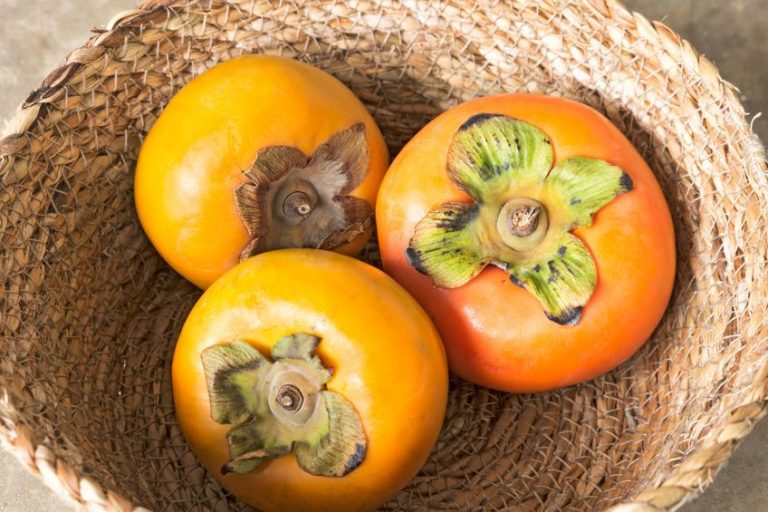
There are two persimmons in people’s memory. The old one: soft, almost liquid, eaten with a
spoon, and which, if you bit into it too early, left your mouth dry and rough for
half an afternoon. And the modern one: firm, crisp, peeled and sliced like an apple.
The striking thing is that they’re the same fruit, off the same tree and out of
the same field. What separates them is how you eat them, how long they keep, and that roughness
one of them is remembered for and the other doesn’t have. Here’s what changes from one to the
other.
The two persimmons, side by side
|
Traditional persimmon |
Firm persimmon (Persimon) |
| Texture |
Soft, jelly-like |
Firm, crisp |
| How you eat it |
With a spoon, cut in half |
Peeled and sliced, or bitten |
| When it’s ready |
When it goes completely soft |
When you get it home |
| It keeps for |
Two or three days |
One or two weeks |
| Astringency |
Until it’s fully ripe |
None |
| Variety |
The same: Rojo Brillante, from the Ribera del Xúquer |
What that roughness in your mouth is
It has a name: astringency. And it isn’t a flavour, it’s a physical
sensation.
An unripe persimmon is full of soluble tannins, the same compounds that make a
young wine or an over-brewed tea taste rough. When you bite the fruit, those tannins bind to the
proteins in your saliva and make them precipitate. The saliva stops being slippery, and there you
have the cardboard-mouth feeling everyone remembers from childhood.
It isn’t toxic or dangerous: it’s uncomfortable and it passes on its own after a while. But it’s
what forced people, for decades, to wait until the persimmon was fit to burst before
eating it.
Why it disappears as the fruit ripens
When the fruit ripens fully, those tannins go from soluble to insoluble: they’re still there, but
they no longer bind to saliva and you stop noticing them. The trouble is that to get to that point
the persimmon has to go completely soft, and by then it can’t be transported or
sliced. Only spooned, at home, that same day.
Where the name comes from
Persimon is the trade name under which the firm persimmon of the Ribera del
Xúquer is sold — the district where practically all of Spain’s persimmons are grown. The variety is
called Rojo Brillante, and it’s the one planted across the whole area, our fields
in Albalat de la Ribera included.
In English, persimmon — with two m’s — is simply the word for the fruit. The brand
dropped an m and kept the name.
When there are any: the shortest season of the year
From October to December, and not much more. Ten or twelve weeks. It’s the
narrowest window in our whole calendar: when it’s over, it’s over until the following autumn.
| Point in the season |
How they are |
| First half of October |
The first ones. Firm and a little less sweet |
| November |
The peak of the season. The best moment |
| December |
The last ones, very sweet. They run out |
| January to September |
None. What’s on sale is from a cold store or from abroad |
Every spring somebody writes to us asking about persimmons. There aren’t any, and it isn’t a
matter of looking harder: the tree has no fruit on it. The full calendar is in
what there is each month.
How to eat them and how to keep them
The firm one allows both, and that’s its virtue.
Straight from the box
Peel it with a peeler or slice it with the skin on, like an apple. In a salad with hard cheese or
walnuts it works very well, because it doesn’t fall apart when you mix it.
If you leave it a week
It softens little by little, and then it’s the old persimmon again: a spoon, cut in half.
With no astringency, because that doesn’t come back. So you’re really buying both
versions in the same box and deciding for yourself when to eat it.
How to slow it down
The fridge. In the salad drawer, a firm persimmon holds for two weeks without softening. Out at
room temperature it gives way in five or six days.
One warning: don’t keep it next to apples or bananas. Those two give off
ethylene and speed up the softening of everything beside them.
What to do with fifteen kilos of persimmons
That’s the question that follows the last one, because a box is fifty to sixty pieces and the
season lasts as long as it lasts. These are the ways out that work best.
Raw, which is where they’re at their best
Firm and sliced, skin on or off. They go with hard cheese, walnuts and cured ham for the same
reason melon does: sweet without being cloying, and they don’t release water when cut.
Freezing the pulp
The most practical option when the whole box starts to soften at once. Cut them in half, scoop
the pulp out with a spoon and freeze it in jars or an ice-cube tray. It keeps for six
months and goes straight into smoothies, cakes, or eaten half-frozen — which doesn’t appeal
in October but does in June.
Roasted and in baking
Soft persimmon replaces mashed banana in almost any cake recipe, and lets you cut the sugar in
the mix. It also roasts well with a little cinnamon.
And a word of caution
On an empty stomach and in quantity, a very astringent persimmon can sit badly; the firm one
doesn’t cause that, but four in a row for breakfast still isn’t a good idea. One a
day is the sensible portion, and at that rate a box lasts nearly two months between two people.
What’s in our box
The box of persimmons is 15 kilos of Rojo Brillante
picked in Albalat de la Ribera, firm and free of astringency when it arrives. About
50 or 60 pieces, depending on that week’s size.
It’s picked after your order comes in and leaves for your home within 24 or 48 hours, with no
cold store in between. That’s why it only appears in the catalogue for those three months: you can
see it in the persimmon section when the season is open, and
From tree to table explains why it isn’t there the rest of the
year.
What’s the difference between a persimmon and a Persimon?
It’s the same fruit and the same variety, Rojo Brillante. The Persimon is
the one you eat firm and free of astringency, like an apple; the traditional one has to be left to
go completely soft before you eat it.
Does the Persimon persimmon contain any chemicals?
No. Ours has no wax, no fungicide and no treatment after picking: it’s
picked the day we prepare your order and goes straight into the box. The sugar is what the fruit
made on the tree.
Why does persimmon leave your mouth rough?
Because of soluble tannins, which precipitate the proteins in saliva and
give a dry-mouth feeling. They disappear when the fruit ripens fully; the Persimon is already eaten
firm without that roughness.
When is the persimmon season?
October to December. It’s the shortest season in the calendar, about ten or
twelve weeks. Outside those months, what’s on sale comes from a cold store or from the other
hemisphere.
Can you let a firm persimmon go soft?
Yes, and it’s what a lot of people prefer. In five or six days out of the
fridge it softens and can be eaten with a spoon, by then without any astringency. In the fridge it
stays firm for about two weeks.